In shortYes, if you give it a full day. This forest has been growing for more than 180 million years, the park sits inside a World Heritage property listed in 1988 under all four natural criteria, and at Cape Tribulation the lowland rainforest runs down to the sand. You pay for it in distance: about two hours from Cairns to the ferry, then another 45 minutes to the cape.
180 million yearstime the Daintree forest has been growing
about 2 hoursdrive from Cairns to the Daintree ferry
9 hourslength of a standard full-day Daintree tour
4.9 ★ (2,567 reviews)rating of the most-reviewed full-day tour on this site
What makes the Daintree different
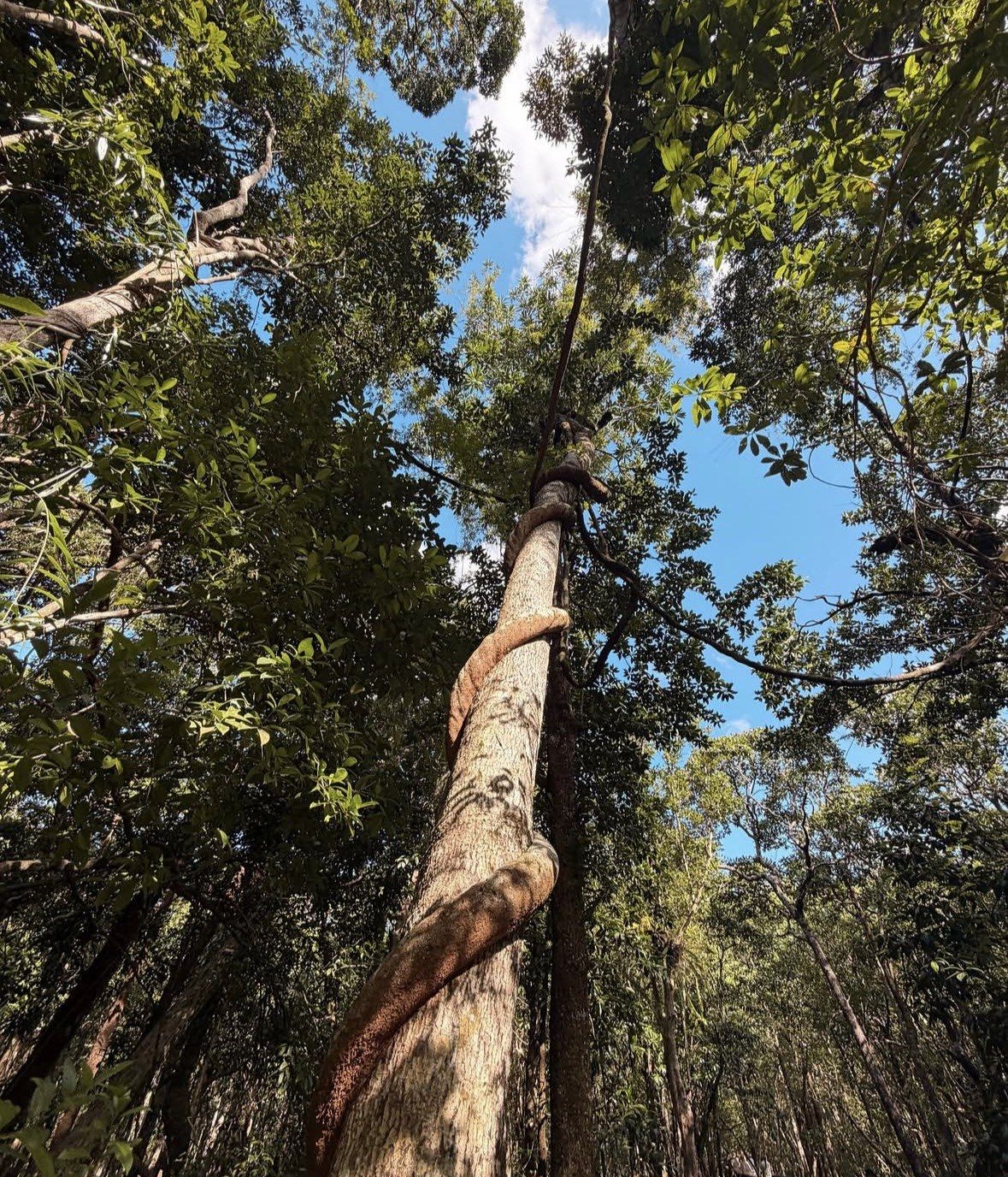
Age is the first argument. Tourism Australia says the forest has been growing for more than 180 million years, which is what makes this the oldest tropical rainforest on earth. The park lies inside the Wet Tropics of Queensland World Heritage Area, on the UNESCO list since 1988 and inscribed under all four natural criteria, with exceptional natural beauty and hundreds of species found nowhere else among the reasons given.
The national park comes in two pieces that do not touch. Mossman Gorge is the inland section, on the Port Douglas side of the water. The other block starts on the north bank of the Daintree River and reaches the Bloomfield River, about 17,000 hectares, and that is what most people mean when they say they are going to the Daintree. At Kulki, the Eastern Kuku Yalanji name for Cape Tribulation, the Wet Tropics and the Great Barrier Reef World Heritage areas meet, and a 600 m return boardwalk leads to an ocean viewing platform. Mossman Gorge has nothing like it, because the gorge sits inland.
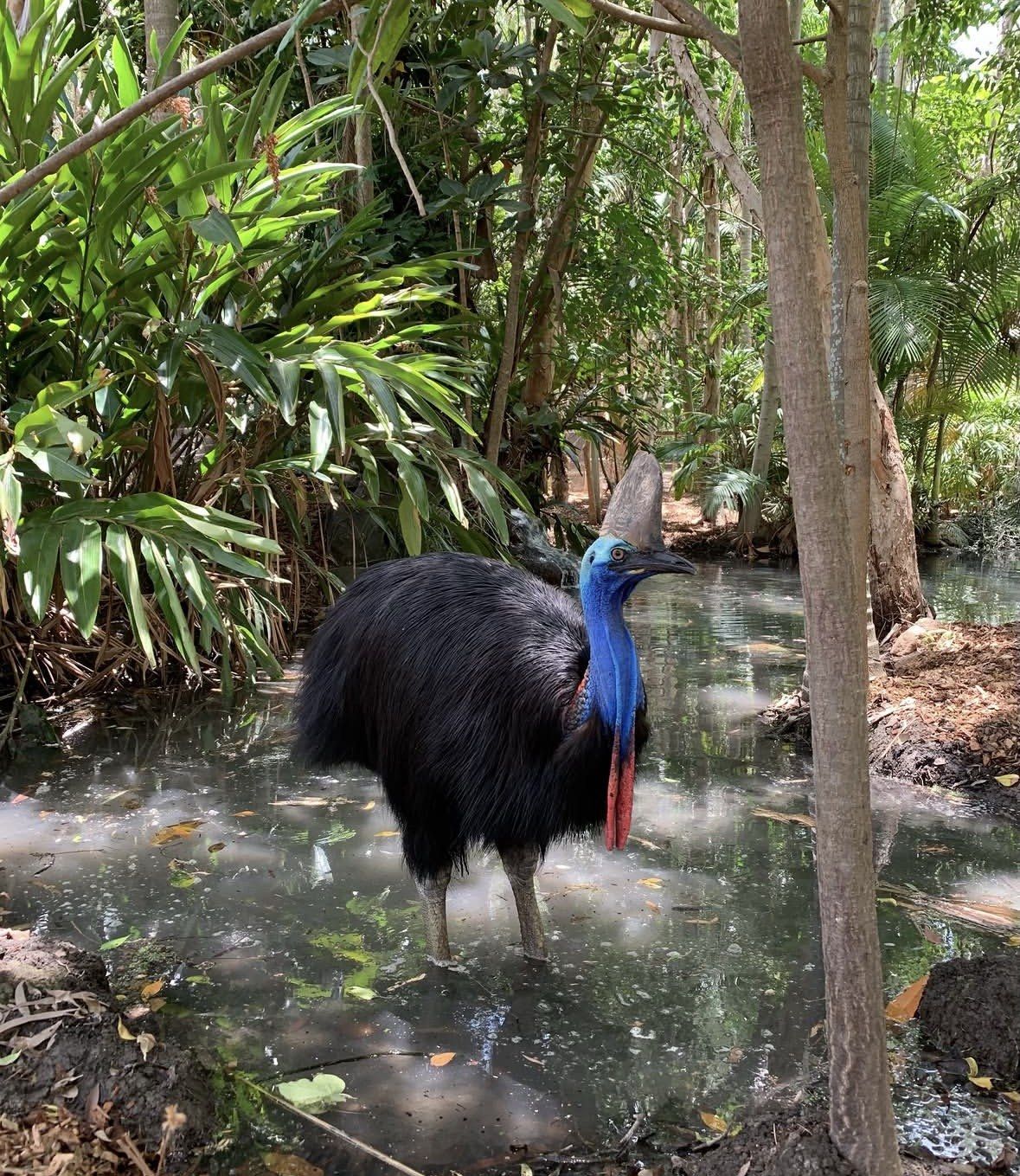
The river is the other draw. It runs about 140 km through the forest, holds estuarine crocodiles in every month of the year, and that is why a one hour wildlife cruise turns up on almost every itinerary. On land the bird people come for is the southern cassowary, up to 2 metres tall, listed as endangered and feeding mostly on fallen fruit from more than 238 recorded plant species. Whether you get one depends on the hour you are standing there: the sighting log kept by the local community group fills up early, between 6 and 9am, then again between 4 and 6pm, with the October to April fruiting months producing the most entries.
The 9-hour day that handles the logistics
If the driving, the cable ferry and the timing are what is making you hesitate, this small-group day from Port Douglas takes all three off your hands and still fits in Mossman Gorge, a river wildlife cruise and Noah Valley north of the river.
★ 4.9/5 · 2,567 reviews
The friction, and what a guided day does with it
What frustrates visitors here is logistics rather than the forest. Distance, one cable ferry and no bridge, high humidity, rain measured in metres, unreliable phone signal, and water you cannot get into. None of that is a reason to skip the Daintree. All of it is a reason to build the day around it or hand it to somebody else.
Each friction point is set out below, with what changes when you travel on one of the full days listed on this site.
| What puts people off | The reality | On a guided day |
|---|
| The drive | Around two hours from Cairns to the ferry, roughly 45 minutes from Port Douglas, then about another 45 minutes of steep, winding sealed road to Cape Tribulation | An air-conditioned vehicle and live commentary while somebody else drives the three hours |
|---|
| The ferry queue | About 27 standard vehicles per trip on a cycle of roughly 15 minutes, with the right-hand approach lane held for locals and some commercial traffic from 9am to 4:30pm | The crossing sits inside the itinerary and is already covered by the tour price |
|---|
| Heat and humidity | Maximums of 28 to 30°C and minimums of 20 to 24°C, with little seasonal relief | Air conditioning between stops and filtered water carried on board |
|---|
| Rain | About 3,000 mm a year, with 75 to 90 per cent of it falling in the green season from roughly November to May | Umbrellas and insect repellent travel on the small-group day from Port Douglas |
|---|
| Patchy phone coverage | Reception is unreliable north of the Daintree River | Timings, navigation and the running order stop being yours to manage |
|---|
| No swimming in the estuaries | Estuarine crocodiles are resident in the Daintree River and the coastal creeks, and the official advice is to stay out of the water and keep 5 metres back from any bank | A river cruise puts you on the water instead |
|---|
| Wildlife is not guaranteed | Sightings depend on hour and season, and crocodiles get harder to spot once the river warms up | A driver-guide watching the roadside all day, with a wildlife cruise included |
|---|
Who will love it, and who should pick a shorter day
The Daintree rewards people who come for the forest itself: old lowland rainforest, a river with crocodiles in it, a coast where the trees stop at the sand, and a park owned and co-managed by its Traditional Owners. Formal title over 160,213 hectares, Daintree National Park included, passed to the Eastern Kuku Yalanji on 29 September 2021, and that is part of what you are visiting.
The trip goes badly for anyone who wants a quick rainforest hit squeezed between other plans. A two hour look north of the river is mostly driving and queueing. If your day is already half spoken for, or small children will not sit through three hours of road, go to the southern section at Mossman Gorge, 20 minutes from Port Douglas and 75 minutes from Cairns with no water crossing: the same national park in a much shorter outing.
- Go if you have a full day or more and you are happy to spend most of it outside Cairns
- Go if wildlife matters and you can be out between 6 and 9am or 4 and 6pm
- Go if Eastern Kuku Yalanji country and culture is part of why you came
- Go if short Grade 1 boardwalks of 10 to 45 minutes suit you better than a summit climb
- Think again if you need a swimming beach, because the river, the creeks and the sea are all no-swim by default
- Think again if you only have a spare half day out of Cairns
Daintree or Kuranda for one rainforest day
This site documents the Daintree and nothing else, so take the comparison as one-sided by design and judge it on time. A Daintree day from Cairns means around two hours of highway before you even reach the river, roughly 140 km each way to Cape Tribulation, and a 9 hour day as the normal shape. A rainforest outing closer to Cairns hands you most of your day back.
The extra hours buy things a rainforest outing near Cairns does not offer: the cable ferry crossing, the Cape Tribulation coast where the two World Heritage areas meet, a wildlife cruise on a crocodile river, and the Grade 1 boardwalks at Dubuji, Jindalba and Madja that thread through lowland forest. If you plan to see rainforest once on this trip and the day is yours, come north. If you want rainforest plus three other things in the same 24 hours, stay closer to Cairns and save the Daintree for a day you can give it properly.
How to choose the format
The forest is worth the day in any format, so the decision worth making now is which one. Four shapes work, and they stack: a full guided day, a culture-led day, an hour on the river, and a guided walk at Mossman Gorge.
Staying in Port Douglas makes the small-group full day the straightforward pick. Where the pull of the place is Eastern Kuku Yalanji country itself, the culture-led day answers that better than any sightseeing itinerary. Put the river cruise early in the morning and in a cooler month, which is when crocodiles are easiest to see.
- The all-round full day: 9 hours, from A$270, rated 4.9 ★ (2,567 reviews), starting in Port Douglas, which puts you 45 minutes from the ferry rather than two. The price absorbs most of what makes a self-planned Daintree day hard work, covering National Park fees, the river crossing, an air-conditioned vehicle, a wildlife cruise on the Daintree River, admission to the Noah Valley rainforest retreat on the north bank, commentary from the driver-guide through the day, morning tea with locally grown Daintree tea, and lunch prepared to order at a rainforest restaurant. Weather gear travels with you too: umbrellas, insect repellent and filtered water on board.
- The culture-led option runs 10 hours from A$402 and is rated 4.9 ★ (16 reviews): a guided rainforest walk at Mossman Gorge, an Aboriginal Coastal Adventure, an Aboriginal art class, a driver-guide who spends the day on stories and culture, and a bush-flavour lunch served at the Mayi Café. It carries the smallest review count on this site, so judge it on the itinerary.
- An hour on the water is the lightest option. Departures sit on the southern, Daintree Village side of the crossing, where most river cruises start, among them a family-run electric boat tied up on the south bank a little before the ferry approach. That operator will take you out a second time if no crocodile turns up, and says the animals get harder to pick out as the river warms.
- Cultural walk at the gorge: the Ngadiku Dreamtime Walk, led by Kuku Yalanji guides, runs about 1.5 hours with departures at 10am, 11am, 12pm, 1pm and 2pm, and takes in a smoking ceremony, an ochre demonstration, bush tea and damper. Shuttle transfers into the gorge are part of it, so you do not arrange them separately.
Questions people ask
Is one day in the Daintree enough?
For the main sights, yes. From Port Douglas, with the ferry about 45 minutes away, one day holds a river cruise, two or three short Grade 1 boardwalks, time on the Cape Tribulation coast and lunch. What one day cannot hold is the 6 to 9am and 4 to 6pm wildlife windows, which is the argument for sleeping in Port Douglas or north of the river rather than Cairns.
Is the Daintree worth visiting in the wet season?
It is, with adjustments. Tourism Australia calls December to April the wet low season, with high humidity and frequent rain but the fullest waterfalls and creeks, while May to September is the high season suited to long walks. Where those months genuinely take an option away is sleeping under canvas: the Cape Tribulation section has a single camping area at Noah Beach, and it shuts from the Friday just before Christmas Day right through to Good Friday.
Will I actually see a cassowary?
There is no guarantee, and anyone promising one is guessing. A 2014 CSIRO survey estimated up to 4,400 cassowaries across the Wet Tropics, and sightings come most often in the early morning and late afternoon, more often again in the October to April fruiting season, along Cape Tribulation Road between Cow Bay and Cape Tribulation, on the Dubuji boardwalk and around the Cape Tribulation foreshore. An encounter comes with rules: keep your distance from adults and chicks alike, stay out of the space between a chick and its father, and put no food in front of either.
Can you swim anywhere in the Daintree?
Plan on staying dry: the river, the coastal creeks and the ocean are all off the list. Estuarine crocodiles live in the Daintree River and coastal creeks, official advice is to stay out of the water and keep at least 5 metres from the edge, and marine stingers may be present at any time of year with the season running November to May. The regional tourism body points visitors to designated freshwater swimming holes such as Masons rather than any Daintree beach.
Do you need a 4WD to visit the Daintree?
No. Every kilometre between the ferry and Cape Tribulation is sealed, with steep, winding stretches over the Alexandra and Noah Ranges. The 4WD requirement starts past the cape, where the Cape Tribulation to Bloomfield Road has creek crossings and is never suitable for towing; the inland CREB Track is restricted the same way.
Read also