In shortTourism Australia states the rainforest has been growing for more than 180 million years, and calls it the world's oldest tropical rainforest. Douglas Shire Council puts the forest at 120,000 hectares, or 1,200 km². The gazetted national park accounts for 73,500 hectares in two sections, the Cape Tribulation one about 17,000 hectares. UNESCO lists the surrounding Wet Tropics on all four natural criteria.
180 million yearstime the Daintree rainforest has been growing
120,000 haarea of the Daintree Rainforest as a whole
73,500 haarea of Daintree National Park in two sections
894,420 haarea of the Wet Tropics World Heritage Area
How old is the Daintree Rainforest
More than 180 million years of growth is the figure Tourism Australia publishes, and on that basis it describes the Daintree as the world's oldest tropical rainforest.
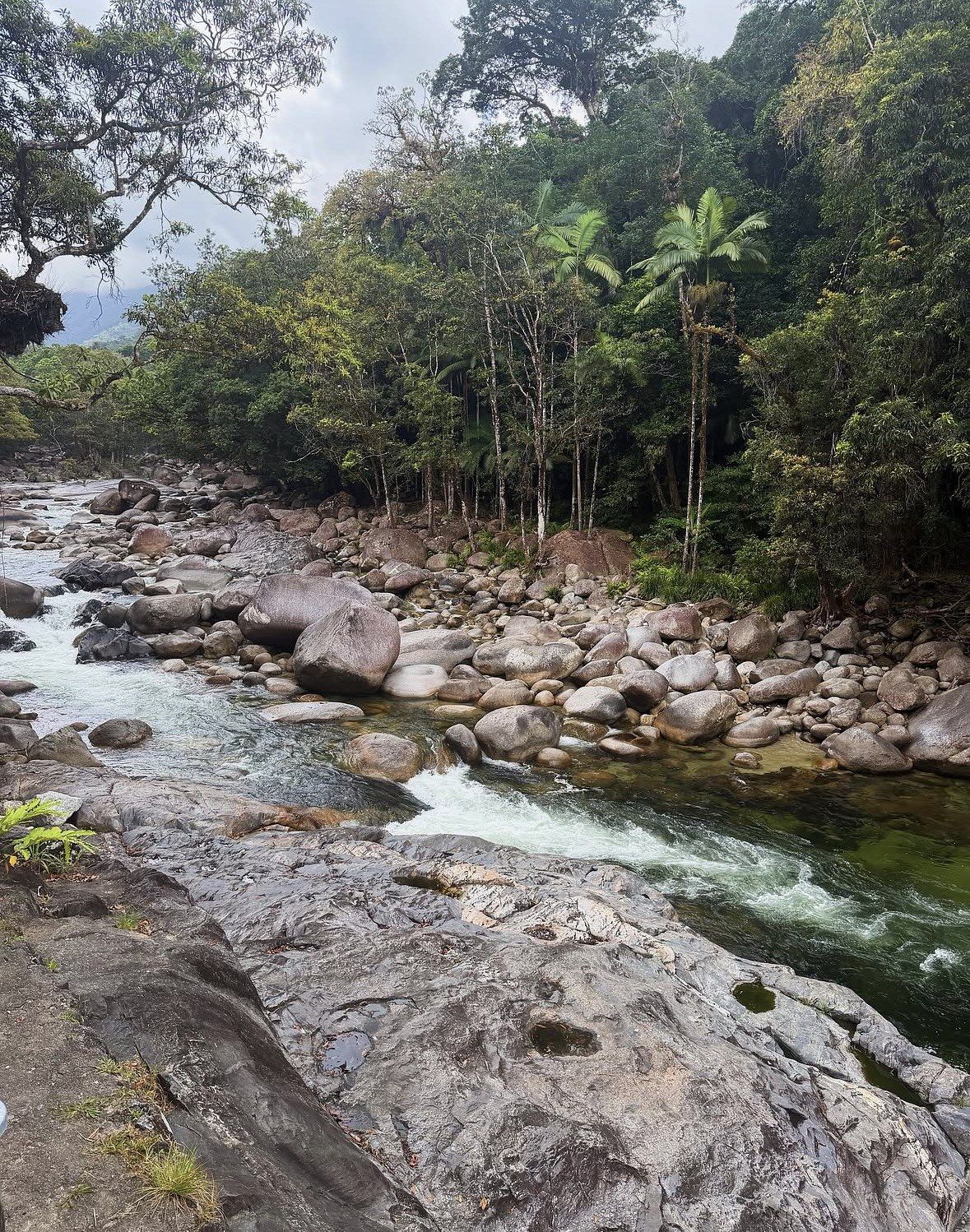
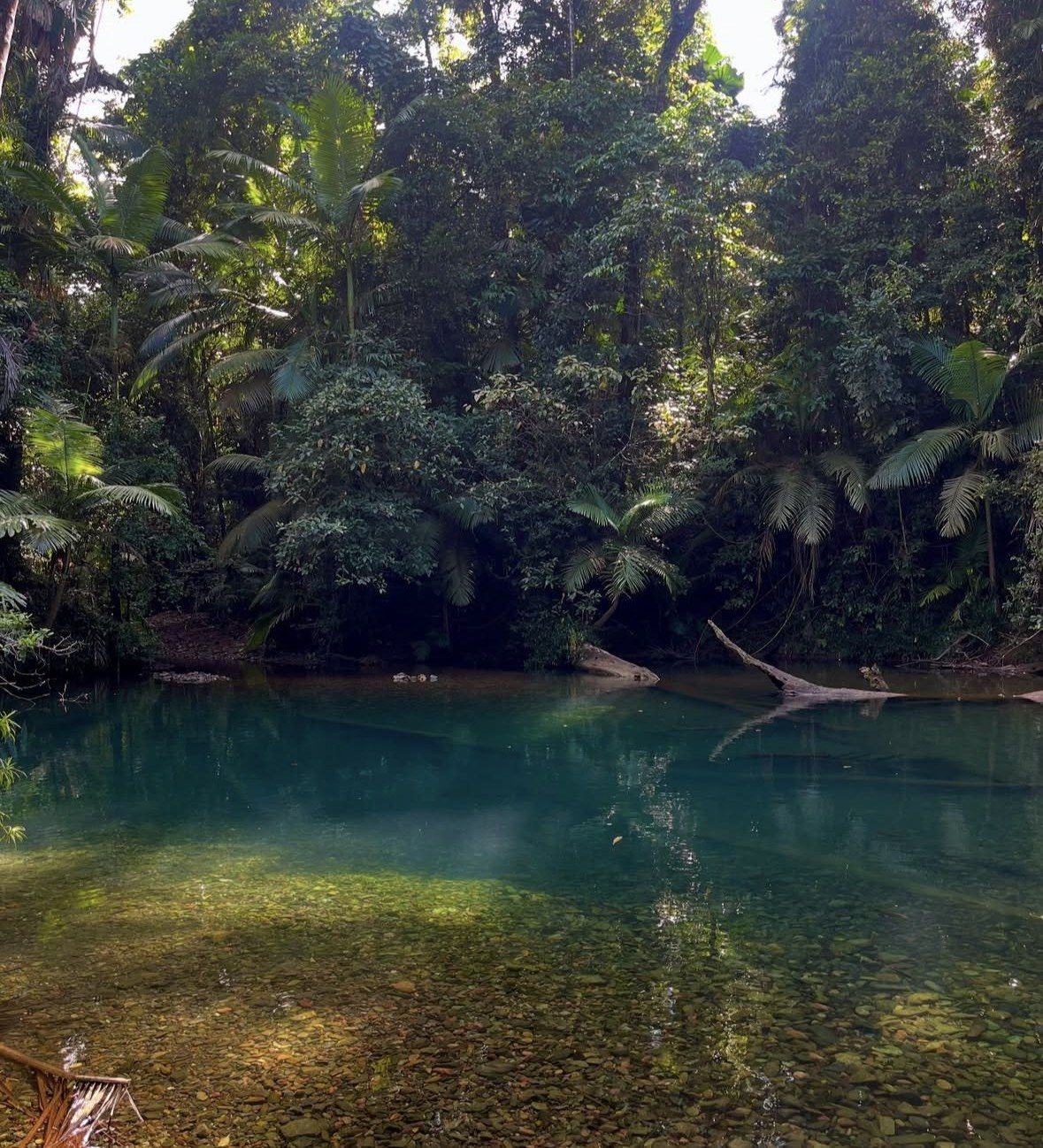
The lowland forest between the Daintree River and Cape Tribulation is where most visitors meet that age in person, on the boardwalks and on a guided day with commentary.
How big is the Daintree Rainforest
Three different numbers circulate because three different bodies measure three different things. The biggest of the three, 120,000 hectares or 1,200 km², is Douglas Shire Council's count of the rainforest itself, and on that measure the council ranks it as the largest surviving tract of tropical rainforest in Australia. Queensland Parks and Wildlife Service measures only the gazetted park inside that forest. UNESCO measures the World Heritage property wrapped around the lot.
Work out which figure a brochure or a listing is using before you plan around it, because most of the forest the council counts sits outside the national park boundary.
| Area | Size | Published by |
|---|
| Daintree Rainforest | 120,000 hectares (1,200 km²) | Douglas Shire Council |
|---|
| Daintree National Park (CYPAL) | 73,500 hectares in two sections | Queensland Parks and Wildlife Service |
|---|
| Cape Tribulation section | About 17,000 hectares, Daintree River to the Bloomfield River | Queensland Parks and Wildlife Service |
|---|
| Wet Tropics of Queensland World Heritage Area | 894,420 hectares, mostly tropical rainforest | UNESCO World Heritage Centre |
|---|
The numbers explained on the ground
A 9-hour small-group day from Port Douglas that crosses the river into the Cape Tribulation section with a driver-guide commentating on the forest, so the 180 million years and the hectare counts come with something to look at.
★ 4.9/5 · 2,567 reviews
What the World Heritage listing records
The property containing the Daintree has carried World Heritage status since 1988, and UNESCO inscribed it on all four natural criteria. The listing names its exceptional natural beauty and the hundreds of species that occur nowhere else on earth. That 1988 inscription applies to the whole Wet Tropics property, and the Daintree sits inside it.
Species lists kept by the Queensland Government for the same World Heritage Area give the detail behind that wording: 139 mammals, 400 birds, 154 reptiles, 64 amphibians and 94 insects, with 19 of the listed mammals threatened. Bennett's and Lumholtz's tree-kangaroos, the musky rat-kangaroo, the platypus and the Daintree River ringtail possum all sit on the official mammal list; Boyd's forest dragon, the white-lipped tree frog, the Ulysses butterfly and the Cairns birdwing are on the reptile, amphibian and insect lists.
The river, the coastline and the climate figures
Measured along its course, the Daintree River runs about 140 km through the forest, and the coastal Daintree region it drains stretches roughly 95 km. That shape matters when you plan the day: you travel along a corridor, and the forest meets the sea at Cape Tribulation.
Rainfall drives all of it. The Daintree averages around 3,000 mm a year, and a wet afternoon is normal in any month.
- Daintree River: about 140 km through the forest
- Coastal Daintree region: roughly 95 km end to end
- Average annual rainfall: about 3,000 mm
- Average maximum temperatures: 28 to 30°C
- Average minimum temperatures: 20 to 24°C
Who owns the country and who lives on it
The Eastern Kuku Yalanji people are the Traditional Owners of this country, and places including Kulki (Cape Tribulation) and Wundu (Thornton Peak) are culturally significant. Formal ownership of 160,213 hectares, the national park among it, passed to them on 29 September 2021, the first time World Heritage-listed parks in Queensland went back to First Nations owners. Responsibility for running the park is shared by two bodies: the Jabalbina Yalanji Aboriginal Corporation and the Queensland Parks and Wildlife Service.
Across the wider Wet Tropics there are at least 17 Traditional Owner groups, so Eastern Kuku Yalanji country is one of many in the region.
Settlement numbers show how thinly the corridor is populated. Daintree Village counts 147 residents, Cow Bay 309 and Wujal Wujal 363, small figures for a corridor that takes most of a day to drive and walk.
Why a Daintree day runs nine hours or more
A 180-million-year-old forest does not read as old from a car park. The things that make the figures mean something, the lowland rainforest meeting the beach, the river, the canopy structure, take hours on foot and on the water, which is why a Daintree trip normally runs nine hours or longer once the driving from Cairns or Port Douglas is counted.
If you want the age and the landscape explained while you are standing in it, the guided days listed on this site are built around exactly that. Rated 4.9 ★ (2,567 reviews), the 9-hour Daintree Rainforest and Mossman Gorge small-group day out of Port Douglas works through most of the ground covered above: National Park fees and the river crossing, a wildlife cruise on the Daintree River, entry to the Noah Valley rainforest retreat on the north bank, live commentary from the driver-guide all day, morning tea that includes locally grown Daintree tea, and a lunch prepared to order at a rainforest restaurant. From A$270.
From Cairns, the Daintree Rainforest and Cape Tribulation Full Day Tour is 9 hours, from A$239, rated 4.7 ★ (1,161 reviews), with return transfers and a driver-guide, National Park fees, a one-hour river cruise, the Alexandra Range Lookout stop, guided walks in the forest and on Cape Tribulation Beach, a rainforest swim, tropical fruit ice cream and lunch. Travellers staying on the south side get no accommodation transfer and join the tour at the operator's office.
Questions people ask
Is the Daintree Rainforest the same thing as the Wet Tropics World Heritage Area?
No. The Daintree sits inside the Wet Tropics of Queensland World Heritage Area, which the UNESCO listing records at 894,420 hectares of mostly tropical rainforest. The Daintree is one part of that property, and Douglas Shire Council measures the rainforest itself at 120,000 hectares. The World Heritage listing has applied since 1988.
Does the Daintree National Park have opening hours?
The park has no gates and no opening hours, so the boardwalks and lookouts are accessible around the clock. What does run to a timetable is everything around it: the Daintree River cable ferry, the only vehicle crossing, operates from 5am to midnight every day including Christmas Day, and the Mossman Gorge shuttle runs 8:00am to 5:00pm. Camping inside the Cape Tribulation section requires a permit booked in advance.
What makes Cape Tribulation different from the rest of the forest?
Cape Tribulation, Kulki to the Eastern Kuku Yalanji, is where the two World Heritage areas meet, the rainforest reaching the coast beside the Great Barrier Reef. The official regional tourism body describes it that way, and the Kulki boardwalk is a 600 m return circuit out to an ocean viewing platform. Boardwalk access can change, so check conditions on the day.
How many cassowaries are there in the region?
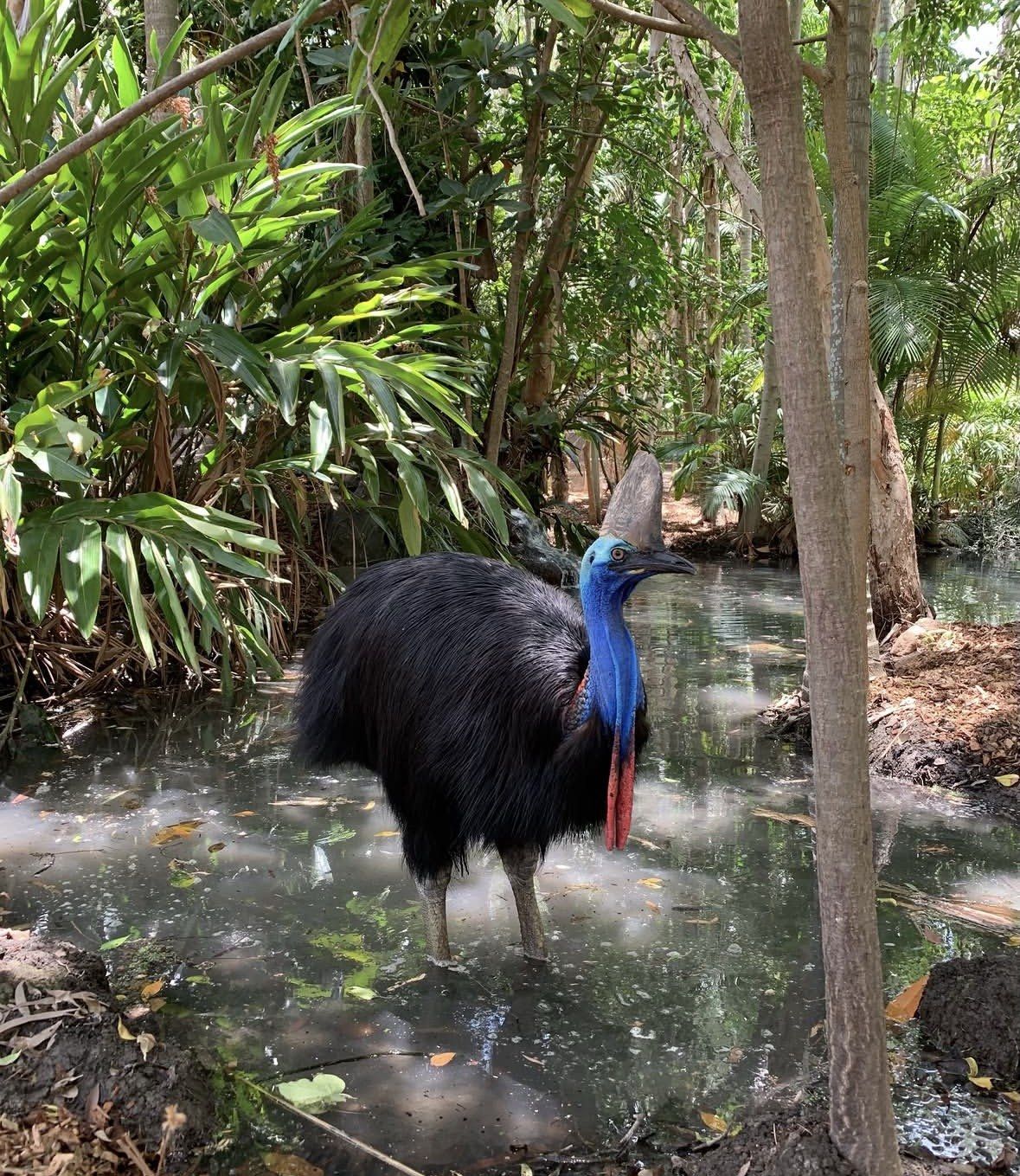
A CSIRO population survey in 2014 estimated up to 4,400 southern cassowaries across the Wet Tropics region, and about 89% of their remaining essential habitat lies in protected tenures. The birds grow to 2 metres tall and weigh up to 76 kg for females and 55 kg for males. Queensland Government advice is never to approach one, never to feed one and to slow down in cassowary habitat.
Which months suit a trip built around these landscapes?
For long walking days, Tourism Australia points to May through September as the high season; it treats December to April as the wet low season, humid and often raining, and that is also when the waterfalls run at their strongest. The regional tourism authority puts the green season at roughly November to May, carrying 75 to 90 per cent of the annual rainfall. Either way, pack for rain.
Read also