In shortMay to September is the best time to visit Daintree Rainforest. Tourism Australia names those months the high season and the pick for long walks, with the most comfortable conditions on the boardwalks. December to April is the wet low season: high humidity, frequent rain, the fullest waterfalls and creeks, and around 3,000 mm of rain a year across the region.
3,000 mmaverage yearly rainfall in the Daintree region
28–30°Caverage daytime maximum temperature in the Daintree
20–24°Caverage overnight minimum temperature in the Daintree
May–Septemberhigh season months for visiting the Daintree
Best time to visit Daintree Rainforest, month by month
Aim for May to September. Tourism Australia puts the high season in those months and calls them the ones suited to long hikes, and that is also when winter maximums sit around 26°C instead of the 31°C of high summer. Cloud still parks on the Alexandra and Noah Ranges and showers still happen, but you get whole days where the Grade 1 boardwalks are pleasant rather than sweaty, and the two Grade 4 climbs become a reasonable plan for experienced walkers.
December to April is the wet low season in the same source's wording: high humidity, frequent rain and the best waterfalls of the year. Creeks that run low in the dry months run hard, and frogs are loud after dark. The cost is unpredictability, plus one hard constraint on where you can sleep.
October and November sit in between. Heat and humidity are building, the cassowary fruiting season starts in October, which is when sightings get more common, and marine stinger season opens in November along the coast from Port Douglas northwards.
| Months | Weather | What it means on the ground |
|---|
| May to September | High season; winter maximums around 26°C, lower humidity | The most comfortable walking conditions; the best window for Mount Sorrow Ridge Trail or Manjal Jimalji; cassowary breeding season runs May to November |
|---|
| October to November | Heat and humidity climbing; stinger season opens in November | Cassowary fruiting season starts in October and sightings get more likely; a full-body stinger suit is advised for anyone entering the sea |
|---|
| December to April | Wet low season; frequent rain, high humidity, summer maximums around 31°C | Waterfalls and creeks at their fullest; Noah Beach camping area is shut from the Friday before Christmas until Good Friday |
|---|
Daintree weather: temperatures, humidity and rainfall
The averages are steady and the rain is not. Average maximums run 28–30°C and minimums 20–24°C, so there is no cold season to plan around and no month where you need more than a light layer. What swings is water: about 3,000 mm falls on the Daintree in an average year, and the regional tourism authority attributes 75 to 90 per cent of it to the green season that runs roughly November to May. Read the live conditions shown on this page against those averages before you commit to a day.
Humidity is the part visitors underestimate. In the wet months the air stays heavy between showers, which is why a 1.2 km boardwalk circuit can feel longer than the stated 45 minutes and why the long ridge trails make sense only in the dry.
Sea temperature barely dips: about 23°C in July and about 28°C in February off the Port Douglas and Daintree coast. The reasons to stay out of the ocean here have nothing to do with how warm the water is, and they apply in every month.
A 9-hour day that works in either season
Air-conditioned vehicle, umbrellas, insect repellent and filtered water on board, with the ferry crossing, National Park fees and a Daintree River wildlife cruise handled for you, which is what a humid or rainy day in the Daintree actually asks for.
★ 4.9/5 · 2,567 reviews
What the rain does to boardwalks, cruises and canopy platforms
Short boardwalk loops cope well with rain. Allow 45 minutes for the 1.2 km Grade 1 Dubuji circuit at Cape Tribulation, 10 minutes for the 600 m return out to the Kulki ocean viewing platform, and about 45 minutes each for Jindalba at Cow Bay (650 m return) and Madja (1.2 km), so a passing shower rarely costs you a whole walk. One caveat if your wet-weather plan leans on these loops: upgrade work takes them out of service from time to time, and the regional visitor guide has had Dubuji, Jindalba and Madja open with Kulki shut, so confirm what is walkable for the day you want it.
For a river cruise, the month matters more than the morning forecast. The electric-boat operator on the south bank offers a repeat cruise if nobody sees a crocodile, and says plainly that crocodiles get harder to spot once the river warms up. If crocodiles are the point of the trip, pick a cooler month and the earliest slot of the day.
The canopy structures at the Discovery Centre in Cow Bay make a good wet-weather fallback: 23 metres of Canopy Tower, a walkway slung 11 metres above the ground and roughly 400 metres of raised boardwalk that keeps you off the mud. Doors are open 9:00am to 5:00pm daily apart from Christmas Day, with nobody admitted after 4:00pm, and since entry carries 7 days of re-entry, a washed-out afternoon can be made good later in the week if you are sleeping north of the river.
Mountain trails are the one thing the wet takes away. Six hours on a Grade 4 route is a different proposition under wet-season humidity: Mount Sorrow Ridge Trail runs 7 km return to a lookout at 680 m, Parks wants walkers on the track before 10am and away from the lookout by 2pm, and it warns that walkers have been lost even on the marked route. At Mossman Gorge the official guidance is that flash flooding can occur even when it is not raining at the gorge, after heavy rain upstream, and that swimming is not advised there in any season.
Stingers, crocodiles and the camping closure
Marine stinger season is the clearest date range in the calendar. The dates come from Surf Life Saving Queensland: November through May, on the coast running from Bustard Heads up past Port Douglas and further north, with a full-body stinger suit advised for anyone going into the sea. Queensland Government advice adds that box jellyfish and Irukandji are present in tropical waters all year, with risk peaking in that November to May window, and Parks says stingers may be present in Daintree coastal water at any time, more often in the warmer months.
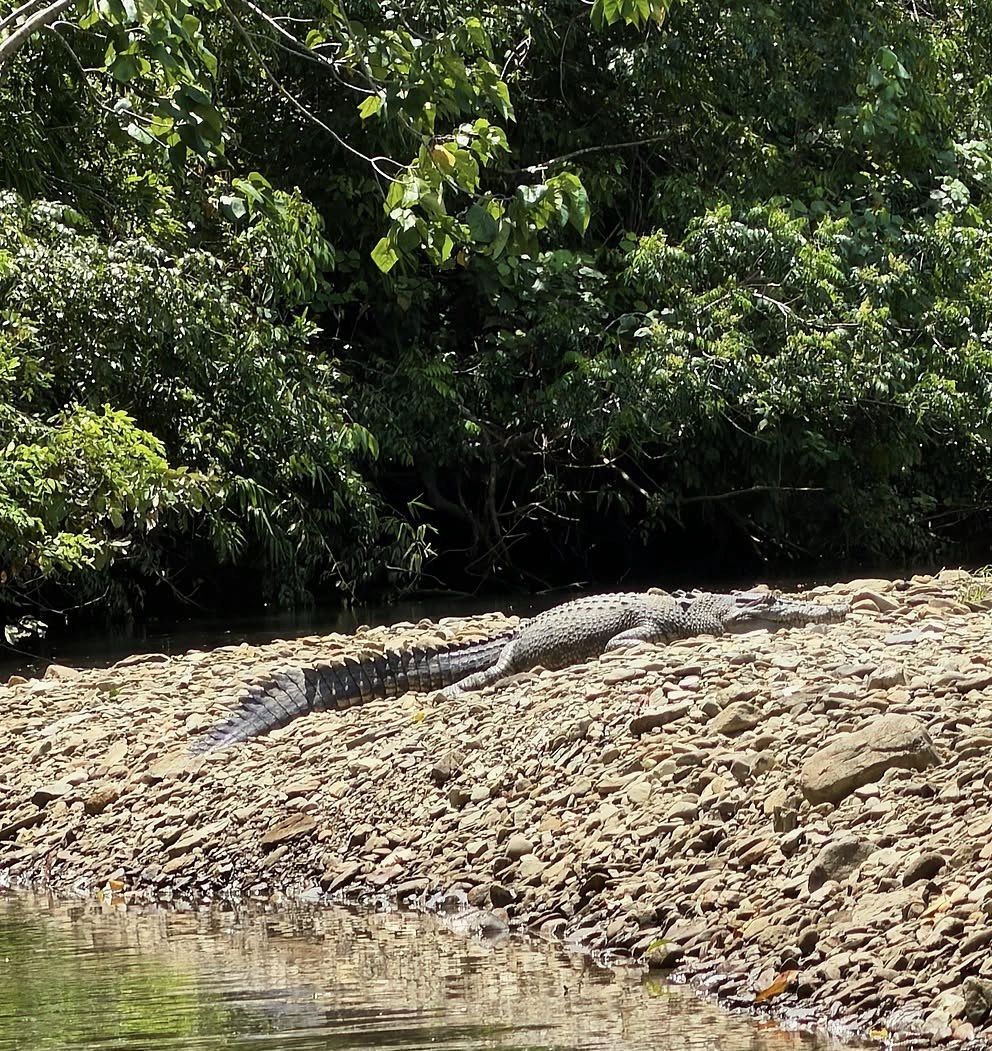
Crocodiles are a year-round presence with a seasonal rhythm. September to April is the breeding period, when official advice says activity runs highest, and wet-season floodwaters can carry estuarine crocodiles into waterways they do not normally occupy; they are resident in the Daintree River and the coastal creeks whatever the month, and Be Crocwise asks you to stay out of the water and keep 5 metres back from any edge. No month shifts the regional tourism body's advice on where to cool off: designated freshwater swimming holes, Masons among them, and not a Daintree beach.
Accommodation is where the wet season bites hardest. Noah Beach, the only camping area in the Cape Tribulation section, has 15 numbered sites that must be booked and paid for before arrival, and it closes for the entire wet season from the Friday immediately before Christmas Day until Good Friday. There is no mobile coverage there and the vehicle height limit is 3.20 m. If your trip falls between late December and Easter, take camping inside the park off the list and book a roof.
- November to May: stinger season along the coast; full-body suit for anyone entering the sea
- September to April: peak crocodile breeding activity; keep 5 metres from any water's edge
- Friday before Christmas to Good Friday: Noah Beach camping area closed
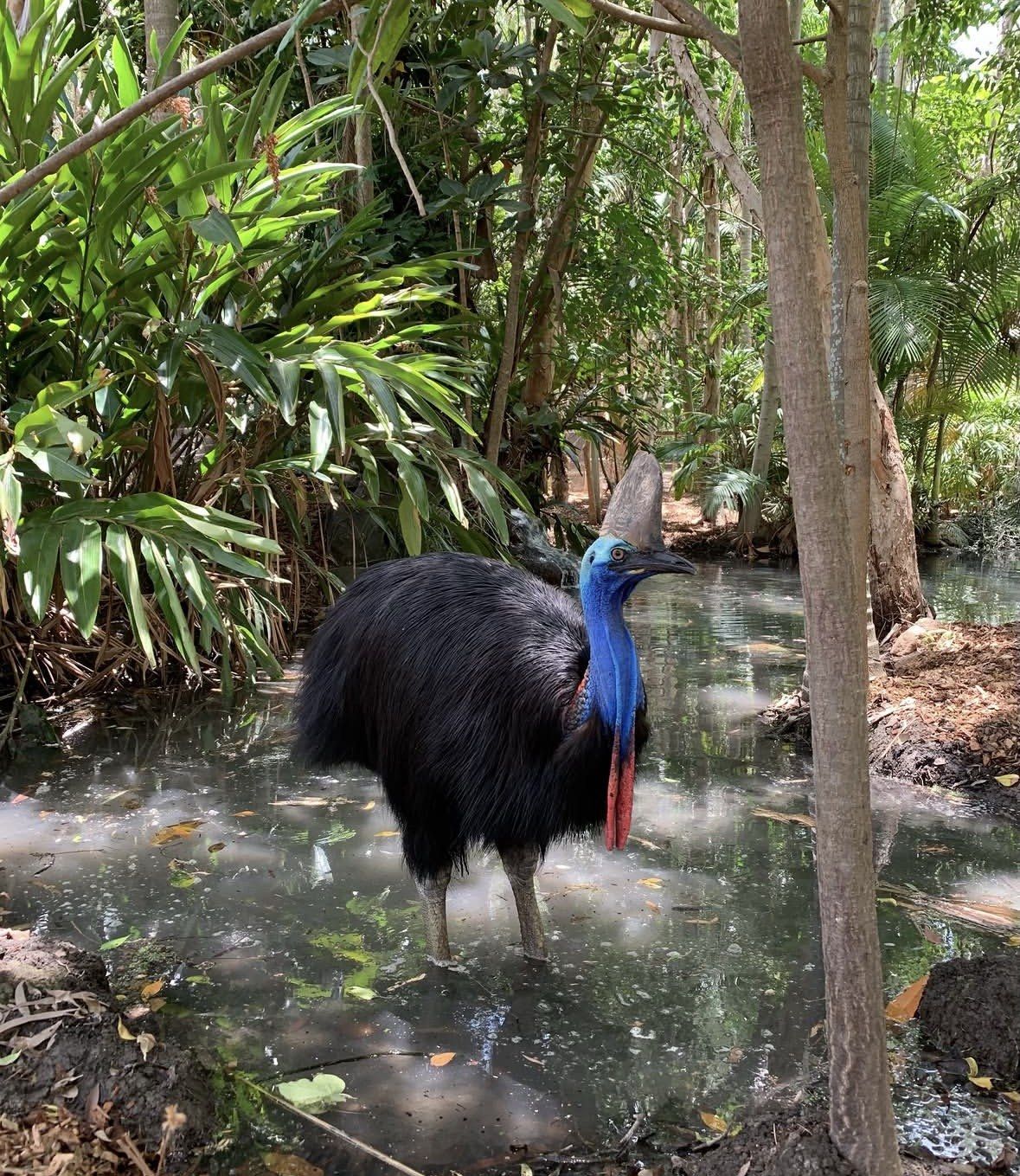
- October to April: cassowary fruiting season, with sightings most likely 6–9am and 4–6pm
- May to November: cassowary breeding season, with males incubating 3–5 eggs for about 50 days
Why tours run year-round, and what a guided day changes
Nothing shuts the forest down. The national park has no gates or opening hours, and the cable ferry, the only vehicle crossing since there is no bridge, runs from 5am to midnight every day of the year, Christmas Day included. Conditions on the day are still worth checking in the wet, because the crossing moves about 27 vehicles per trip on a cycle of roughly 15 minutes and queues in peak season back up along Cape Tribulation Road.
A guided day changes the calculation in the wet in three concrete ways. The vehicle is air-conditioned, which matters when minimums sit at 20–24°C and the humidity does not let up; umbrellas, insect repellent and filtered water are carried on board on the small-group day from Port Douglas; and the ferry crossing and National Park fees are already handled, so there is no ticket to sort out and no queue to judge. A driver-guide also spots wildlife you might walk past, which counts for more when the light is flat and the forest is dripping.
That day runs 9 hours in any season, from A$270, rated 4.9 ★ (2,567 reviews). Inside it sit a Daintree River wildlife cruise, entry to the Noah Valley rainforest retreat on the north bank, commentary that keeps going through the day, morning tea made with locally grown Daintree tea, and a lunch cooked to each order at a rainforest restaurant. Daintree ice cream sits outside that price and is paid for on the spot if you want it.
Pick the month, then pick the activity mix
Decide the season first, then build the day around what that season does well. In the cooler months put the river cruise early, stack three or four short boardwalks across the Cape Tribulation section, and keep one morning spare for a ridge trail if you are an experienced walker. The 6–9am and 4–6pm wildlife windows are easiest to use from a bed north of the river.
Coming in the wet, drop the summit and the campsite and spend the budget on water and shelter: the fullest creeks and waterfalls, a canopy platform that works in rain, the first river cruise of the day, since crocodiles are harder to spot once the water warms, and the nocturnal forest, which is at its loudest in the humid months.
Once the month is fixed, book a departure that suits it. The Port Douglas small-group day covers Mossman Gorge, the crossing, a wildlife cruise and the north bank in 9 hours, and the booking can be cancelled up to 24 hours before departure for a full refund, which is useful insurance against a wet-season forecast.
Questions people ask
Which month is driest in the Daintree?
The season split is a better planning tool than any single month. Tourism Australia names May to September the high season and December to April the wet low season, and the regional tourism authority attributes 75 to 90 per cent of annual rain to the green season from roughly November to May. The regional average is about 3,000 mm a year.
Does anything close in the wet season?
Scheduled closures are few. The park is unfenced, with no posted hours, and the cable ferry runs 5am to midnight every day of the year, Christmas Day included. The one scheduled wet-season closure is Noah Beach camping area, shut from the Friday immediately before Christmas Day until Good Friday. Boardwalk access can change at any time of year, so confirm conditions before you drive north.
Is February a bad time to visit?
February is the wet low season, with frequent rain, high humidity and summer maximums around 31°C, and it is also when the waterfalls and creeks run hardest. Stinger season is in full swing from November to May and the operator on the river warns that crocodiles are harder to spot once the water warms. Go with a canopy platform or a guided day as your rain fallback and book the cruise early in the morning.
What time of day should I plan wildlife spotting?
Early and late. Logged community sightings cluster in two windows, 6 to 9am and then 4 to 6pm, and they come up more often through the October to April fruiting months. Behind the wheel that means easing off through cassowary habitat and driving on rather than pulling up for a bird on the road; on foot it means no approaching an adult or a chick, and never putting yourself between a chick and its father.
Can I swim anywhere once the dry season starts?
Treat the rivers, creeks and the sea as no-swim whatever the month. Estuarine crocodiles do not leave the Daintree River or the coastal creeks when the dry arrives, and official advice puts their activity at its highest across the September to April breeding months; the Be Crocwise rules are to keep out of the water altogether and stand no closer than 5 metres to the edge. Marine stingers are present year-round with risk peaking November to May, and the official position at Mossman Gorge is that swimming is not advised. Designated freshwater swimming holes, or the spot your tour operator uses, are the realistic options.
Read also