Daintree Rainforest Tours, Boardwalks and Trip Planning
The park comes in two separate sections, the river has no bridge, and a cable ferry moves about 27 vehicles at a time. This page sets out which part of the park each road and tour reaches, when to go, and which day tour matches the trip you have in mind.
Daintree Rainforest: the park's two sections and the river crossing
Mossman Gorge sits south of the water and needs no ferry, while the Cape Tribulation section starts on the far bank. Which half you aim at decides the whole day.
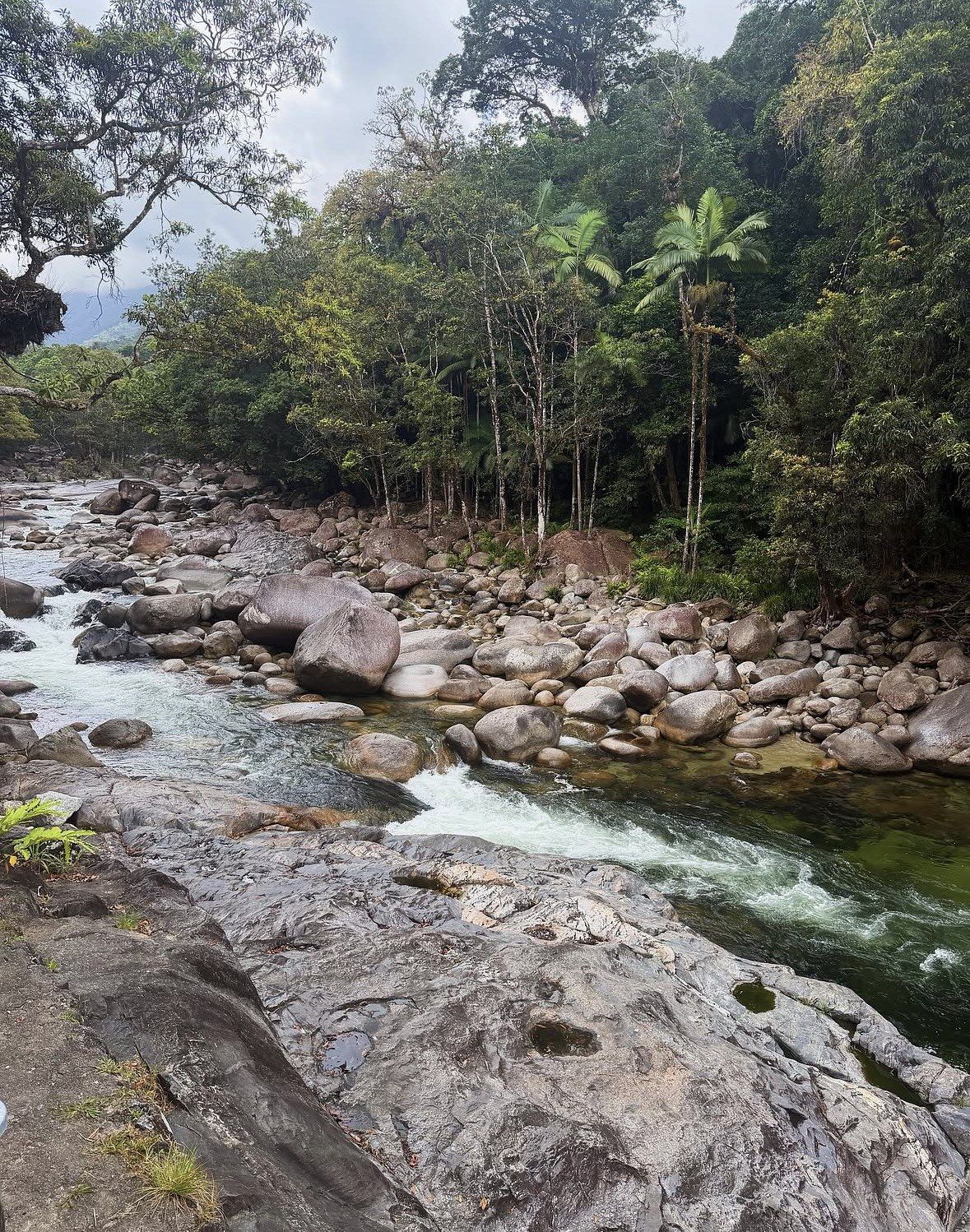
Daintree National Park (CYPAL) covers 73,500 hectares in two separate sections, Mossman Gorge and Cape Tribulation. The Cape Tribulation section, which is what most visitors picture, runs about 17,000 hectares from the Daintree River north to the Bloomfield River. Douglas Shire Council puts the wider rainforest at 120,000 hectares, or 1,200 km², and calls it Australia's largest remnant of tropical rainforest. All of it sits inside the Wet Tropics of Queensland World Heritage Area, 894,420 hectares of mostly tropical forest. Mossman Gorge lies about 20 minutes from Port Douglas and 75 minutes from Cairns, with no river crossing involved.
The forest has been growing for more than 180 million years, Tourism Australia states, which makes it the world's oldest tropical rainforest. World Heritage listing has applied to the wider region since 1988, inscribed for all four natural criteria, including its exceptional natural beauty and its hundreds of species found nowhere else. The Eastern Kuku Yalanji Aboriginal people are the Traditional Owners, and places such as Kulki at Cape Tribulation and Wundu, Thornton Peak, are culturally significant. On 29 September 2021 they gained formal ownership of 160,213 hectares, the first World Heritage-listed parks in Queensland returned to First Nations owners. Jabalbina Yalanji Aboriginal Corporation and the Queensland Parks and Wildlife Service manage the park jointly.
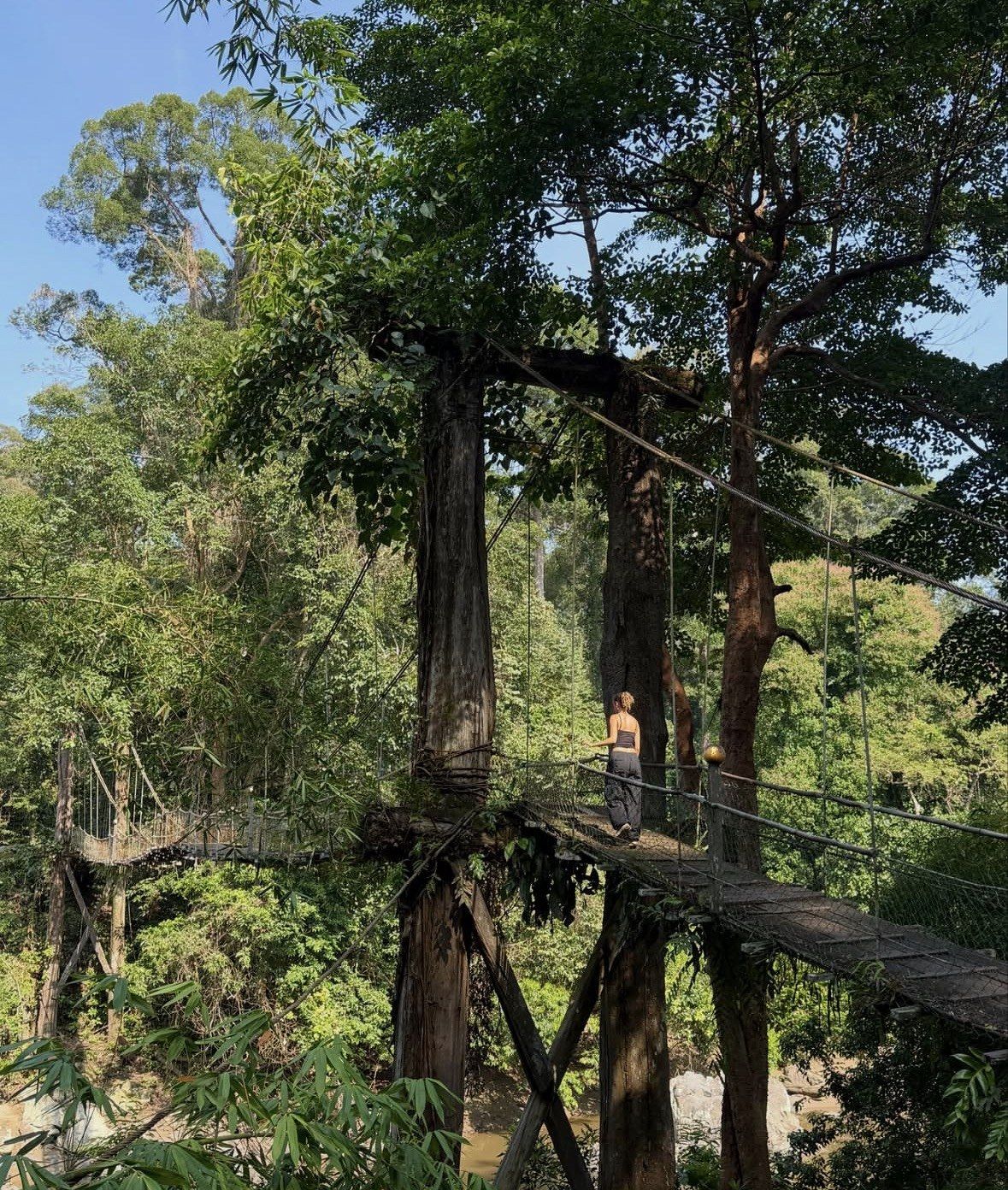
The signature walks are short. Dubuji at Cape Tribulation is a 1.2 km Grade 1 circuit of about 45 minutes, the Kulki boardwalk runs 600 m return to an ocean viewing platform in roughly 10 minutes, Jindalba at Cow Bay is 650 m return and Madja is 1.2 km. Boardwalk access can change, and the regional visitor guide has reported Kulki closed for upgrades. The Rainforest Discovery Centre at Cow Bay, about 10 km north of the ferry, opens 9:00am to 5:00pm daily except Christmas Day with last entry at 4:00pm, and has a 23 m canopy tower.
National park area73,500 hectares
Cape Tribulation sectionabout 17,000 hectares
Wet Tropics World Heritage Area894,420 hectares
World Heritage listed since1988
Age of the rainforestmore than 180 million years
Cable ferry operating hours5am to midnight, every day
73,500 ha
One park, two separate sections
Daintree National Park (CYPAL) is split between Mossman Gorge in the south and Cape Tribulation in the north. No walking route connects them, and only the northern section involves the river crossing.
17,000 ha
The part people mean
The Cape Tribulation section stretches from the Daintree River north to the Bloomfield River. This is where the lowland forest meets the beach, and where Dubuji and Kulki are.
1988
World Heritage for all four criteria
UNESCO lists the Wet Tropics of Queensland for every natural criterion, including exceptional natural beauty and hundreds of species found nowhere else. The property covers 894,420 hectares.
160,213 ha
Returned on 29 September 2021
The Eastern Kuku Yalanji people gained formal ownership of 160,213 hectares, including Daintree National Park. These were the first World Heritage-listed parks in Queensland returned to First Nations owners.
400 birds
What the species lists cover
The Wet Tropics World Heritage Area records 400 bird species, 139 mammals, 154 reptiles, 64 amphibians and 94 insect species. Nineteen of the listed mammals are threatened, among them the spectacled flying-fox.
27 vehicles
The cable ferry is the only crossing
No bridge spans the Daintree River. The ferry runs 5am to midnight every day including Christmas Day, carries about 27 standard vehicles per trip and takes roughly 15 minutes including loading.
Ngadiku Dreamtime Walk at Mossman Gorge
Kuku Yalanji guides lead a walk of about 1.5 hours with a smoking ceremony, an ochre demonstration, bush tea and damper. Departures run daily at 10am, 11am, 12pm, 1pm and 2pm. No footpath links the Cultural Centre car park to the gorge, so the shuttle is how you get in; it runs every 15 minutes from 8:00am to 5:00pm, last bus out at 4:30pm.
Daintree River wildlife cruise
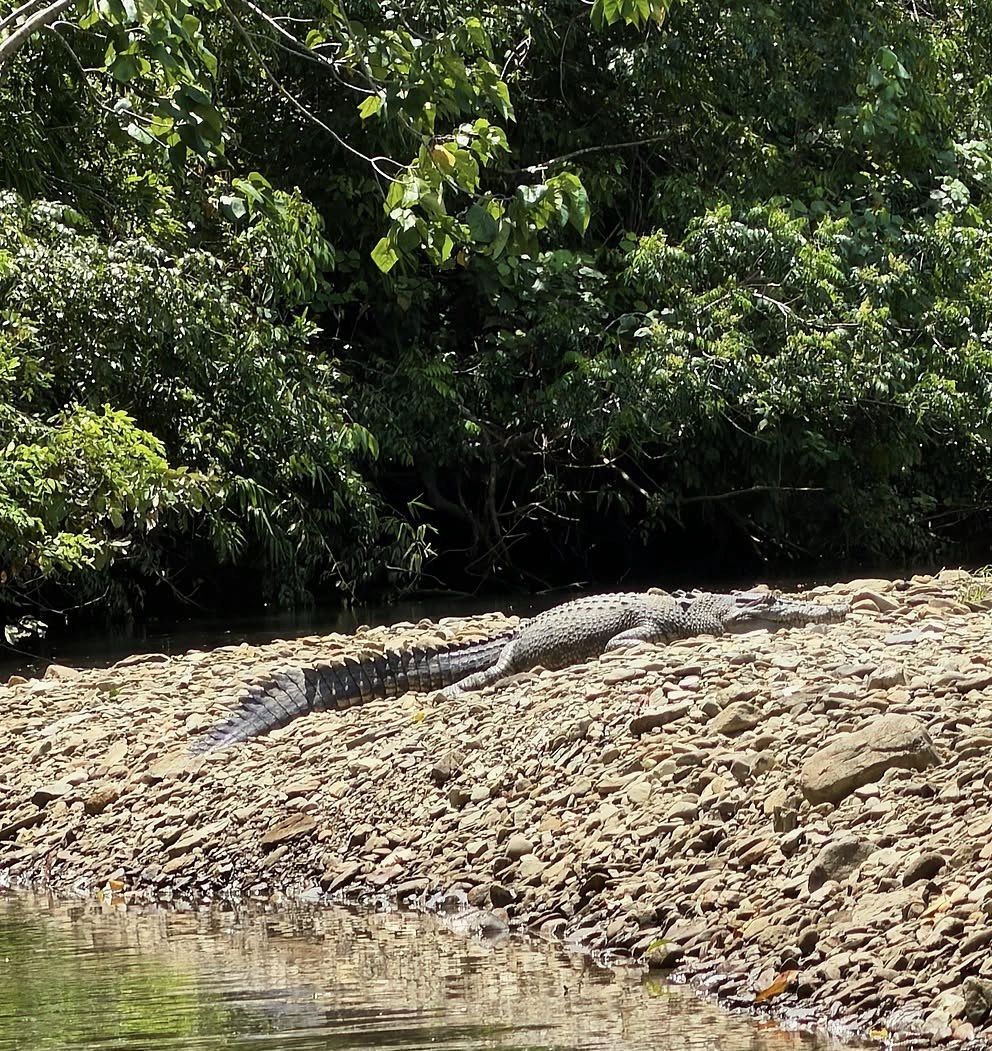
Most cruises leave from the southern, Daintree Village side of the river. The Solar Whisper electric boat is moored 400m before the car ferry on the left, at the ticket office with a dinosaur out front, and runs one hour with commentary. The operator offers repeat cruises if no crocodile is seen and notes they are harder to spot once the river warms up, so take a cool morning slot.
Grade 1 boardwalks at Cape Tribulation and Cow Bay
Stacking three or four short boardwalks is the realistic way to see the forest. Dubuji is 1.2 km in about 45 minutes, Kulki 600 m return in 10 minutes, Jindalba 650 m return and Madja 1.2 km. Access varies and sections close for upgrades, so check the status before committing to one in particular.
Canopy level at the Discovery Centre, Cow Bay
The centre sits about 10 km north of the ferry and is reachable in a 2WD car. It has a 23 m canopy tower, an aerial walkway 11 m up and roughly 400 m of raised boardwalk, with an audio tour in 8 languages and a 68-page guidebook. Doors open 9:00am to 5:00pm daily except Christmas Day, last entry 4:00pm.
Night walk at Cape Tribulation
A 1.5-hour walk from A$55 looks for frogs, possums and insects after dark, with a poncho and torch provided. It meets at the reception of Ferntree Rainforest Lodge, 36 Camelot Cl. Pair it with a day tour on a different day rather than the same one.
If you want a long, hard walk
Only two tracks are demanding: Mount Sorrow Ridge Trail, 7 km return and about 6 hours to a 680 m lookout, and Manjal Jimalji, 10.6 km return over roughly 8 hours, both Grade 4. Parks advises starting Mount Sorrow before 10am and leaving the lookout by 2pm so daylight remains. At Mossman Gorge the Rainforest Circuit is 3.4 km, Grade 3, about 2 hours.
Four parts of the same region, and what each one actually delivers in a day.
These four get weighed against each other because they look interchangeable on a map, and they are not. Mossman Gorge sits south of the water and needs no river crossing; Cape Tribulation needs the cable ferry plus about another 45 minutes of driving beyond it. Daintree Village is the cruise base on the south bank, and Cow Bay is the first settlement on the north side. The table sets out what each part of the Daintree Rainforest gives you, so you can match it to the hours you have.
Crowds
Price
Best For
What Sets It Apart
★ Daintree Rainforest
Peak-season ferry queues can stretch back along Cape Tribulation Road, and from 9am to 4:30pm the right lane is a priority lane for locals
Day tours from A$239 to A$402; tours that cross the river include the ferry
A full 9 to 12 hour day covering both sides of the river
73,500 hectares in two sections inside an 894,420 hectare World Heritage area, growing for more than 180 million years
Mossman Gorge
Shuttle departures every 15 minutes from 8:00am to 5:00pm spread arrivals through the day
Included in most full-day tours on this site
Half a day from Port Douglas, 20 minutes away, with no river crossing
The southern park section, with Kuku Yalanji-guided Dreamtime Walks at 10am, 11am, 12pm, 1pm and 2pm
Cape Tribulation
Boardwalks tend to be quieter early in the morning and late in the afternoon
Included in the Cape Tribulation day tours and the night walk from A$55
Grade 1 boardwalks and the coast where two World Heritage areas meet
Dubuji 1.2 km, Kulki 600 m return to an ocean platform, and the Mount Sorrow trailhead for Grade 4 walkers
Daintree Village
A settlement of 147 residents, so pressure is light outside cruise departures
River cruises from A$35 for one hour
Wildlife cruising and birdwatching without crossing the river
Most cruises leave from this southern bank, and crocodiles are easier to spot on cool mornings
Cow Bay
A settlement of 309 residents; visits spread across the Discovery Centre's 9:00am to 5:00pm opening
Entry and tour costs vary by operator
Canopy-level viewing and a wet-afternoon fallback
A 23 m canopy tower, an 11 m aerial walkway and 400 m of raised boardwalk, about 10 km north of the ferry
The span is what sets the Daintree Rainforest apart from any single stop inside it: 73,500 hectares of national park in two sections, a 120,000 hectare rainforest around them, and World Heritage listing since 1988 for all four natural criteria. Mossman Gorge alone gives you the gorge and the cultural walk. Cross the river and you add lowland forest running down to the beach, canopy structures at Cow Bay, and cassowary habitat along Cape Tribulation Road.
Practical info
Everything to know about the Daintree Rainforest
Access, seasons, packing, etiquette and the official safety rules that apply here.
How to get there and get around
Cairns is the arrival airport for most visitors. Driving from Cairns to the Daintree River ferry takes around two hours, and from Port Douglas roughly 45 minutes. From the north bank it is about another 45 minutes to Cape Tribulation, making the full Cairns to Cape Tribulation run about 140 km each way. Mossman Gorge, the southern park section, sits about 20 minutes from Port Douglas and 75 minutes from Cairns with no crossing involved.
The cable ferry is the only vehicle crossing of the river and runs continuously from 5am to midnight every day, including Christmas Day. It takes about 27 standard vehicles per trip, roughly 15 minutes including loading and unloading, and in peak season the queue can back up along Cape Tribulation Road. The full-day tours on this site that go north of the river include the ferry crossing. At Mossman Gorge, the Cultural Centre shuttle is the way into the gorge, running every 15 minutes between 8:00am and 5:00pm.
Cairns to the Daintree River ferry: about two hours; Port Douglas to the ferry: roughly 45 minutes
Ferry to Cape Tribulation: about 45 minutes on a sealed but steep and winding road over the Alexandra and Noah Ranges
The road to Cape Tribulation is sealed, so no 4WD is needed
Beyond Cape Tribulation, the Cape Tribulation-Bloomfield Road towards Wujal Wujal and Cooktown is 4WD only, with creek crossings and never suitable for towing; the CREB Track is the same
From 9am to 4:30pm in peak season the right-hand ferry lane is reserved as a priority lane for locals and some commercial vehicles
Mobile reception is patchy north of the river, so download maps and booking confirmations before you cross
Fuel, a supermarket and a village store are at Daintree Rainforest Village in Diwan, open 7am to 6pm
Best time to visit, month by month
May to September is the high season in Tourism Australia's account, and the better window for long hikes. December to April is the wet low season: high humidity, frequent rain and the strongest waterfalls. The green season runs roughly November to May and delivers 75 to 90 per cent of annual rainfall. The region averages about 3,000 mm of rain a year, so a wet afternoon counts as normal even outside those months.
Temperatures stay narrow year round. Average maximums run 28 to 30°C with minimums of 20 to 24°C, summer maximums sit around 31°C and winter maximums around 26°C. Sea temperatures range from about 23°C in July to 28°C in February. Cassowary sightings are most likely between 6am and 9am and again from 4pm to 6pm, and more common through the October to April fruiting season, with breeding from May to November.
May to September: high season, best for the Grade 3 and Grade 4 walks and for cool-morning river cruising
December to April: wet low season, frequent rain, high humidity and the fullest waterfalls
November to May: green season, carrying 75 to 90 per cent of the yearly rainfall
Average annual rainfall about 3,000 mm; maximums 28 to 30°C, minimums 20 to 24°C
Sea temperature about 23°C in July rising to 28°C in February
Crocodiles are harder to spot once the river warms up, so take a cruise early in the day and in a cooler month
Marine stinger risk peaks November to May, which shapes anything involving the ocean
What to pack for a rainforest day
Rain gear comes first, in any month. Pack a light rain jacket or poncho, closed walking shoes with grip for the 3.4 km Grade 3 Rainforest Circuit and the ridge trails, insect repellent, sun protection and more water than you think a 45-minute boardwalk needs in 30°C humidity. A dry bag or zip-lock for a phone and camera earns its space. Cash is useful north of the river, where card payments can be unreliable in bad weather.
Clothing that dries fast beats cotton. If you plan to enter the ocean, Surf Life Saving Queensland recommends a full-body stinger suit, and hire is available through reef operators at Cape Tribulation. The small-group Port Douglas tour carries umbrellas, insect repellent and filtered water on board, and the night walk provides a poncho and torch; the river cruise does not include repellent or raincoats, so bring your own for that hour.
Rain jacket or poncho, whatever the forecast says
Closed walking shoes with grip for the longer circuits and ridge trails
Insect repellent, especially for the river cruise, where it is not provided
Full-body stinger suit if you intend to swim in the sea, available for hire from reef operators
Refillable water bottle; humidity does the work even on short boardwalks
Offline maps and downloaded booking confirmations for the patchy-reception stretch north of the river
Some cash, since card and EFTPOS can drop out in heavy weather
Binoculars or a long lens for cassowaries, tree-kangaroos and the Ulysses butterfly
Local tips worth knowing before you go
This is Eastern Kuku Yalanji country. The Traditional Owners hold formal ownership of 160,213 hectares including the national park, gained on 29 September 2021, and the park is managed jointly by Jabalbina Yalanji Aboriginal Corporation and the Queensland Parks and Wildlife Service. Kulki at Cape Tribulation and Wundu, Thornton Peak, are culturally significant places. At least 17 Traditional Owner groups live across the Wet Tropics, and cultural walks at Mossman Gorge are led by Kuku Yalanji guides.
Settlements are small and services thin. Daintree Village has 147 residents, Cow Bay 309 and Wujal Wujal 363. Dining options are limited and clustered: all-day food at the Discovery Centre from 9am to 5pm, Daintree Siesta and the village store at Diwan, and at Cape Tribulation the Sandbar from 12pm to 8pm and Tides at Cape Trib Beach House from 8am to 8:30pm. Dogs are not permitted in most of the national park north of the river.
Name the Eastern Kuku Yalanji as Traditional Owners when you talk about the park, Mossman Gorge or Kulki
Dreamtime Walks at Mossman Gorge depart at 10am, 11am, 12pm, 1pm and 2pm and run about 1.5 hours
The last shuttle out of Mossman Gorge leaves at 4:30pm, so time the walk you do afterwards
The Discovery Centre's last entry is 4:00pm, which makes it a morning or early-afternoon stop
Daintree Ice Cream at Diwan, 14 km north of the ferry, opens 9:00am to 5:00pm and serves four seasonal flavours in one cup
Dogs stay out of most of the park north of the river, with limited exceptions around Cape Tribulation and Cow Bay
Health and safety rules that apply here
Treat all water as no-swim by default. Estuarine crocodiles live in the Daintree River and coastal creeks, and the Queensland Government's Be Crocwise rules are to stay out of the water and at least 5 metres back from the water's edge. Crocodiles occur anywhere between Gladstone and Cape York Peninsula, in waterways and in the sea, and can stay submerged out of sight for hours. Douglas Shire Council advises never swimming where crocodiles may live even with no warning sign present.
Crocodile activity peaks in the September to April breeding season, and floodwater can spread animals into places they do not normally use. Marine stingers including box jellyfish and Irukandji are present year round with risk peaking November to May, and a full-body suit is recommended for anyone entering the ocean. At Mossman Gorge the official position is that swimming is not advised: the river is unpredictable and unsupervised, and flash flooding can occur even when it is not raining at the gorge. Where a tour includes a swim, it is at the operator's freshwater spot and the operator's instructions govern.
Be Crocwise: stay out of the water and keep at least 5 metres from any water's edge
Obey every crocodile warning sign, and assume risk even where there is none
Swim only at designated freshwater swimming holes such as Masons, never at Daintree beaches
Marine stingers year round, peak risk November to May; wear a full-body stinger suit in the sea
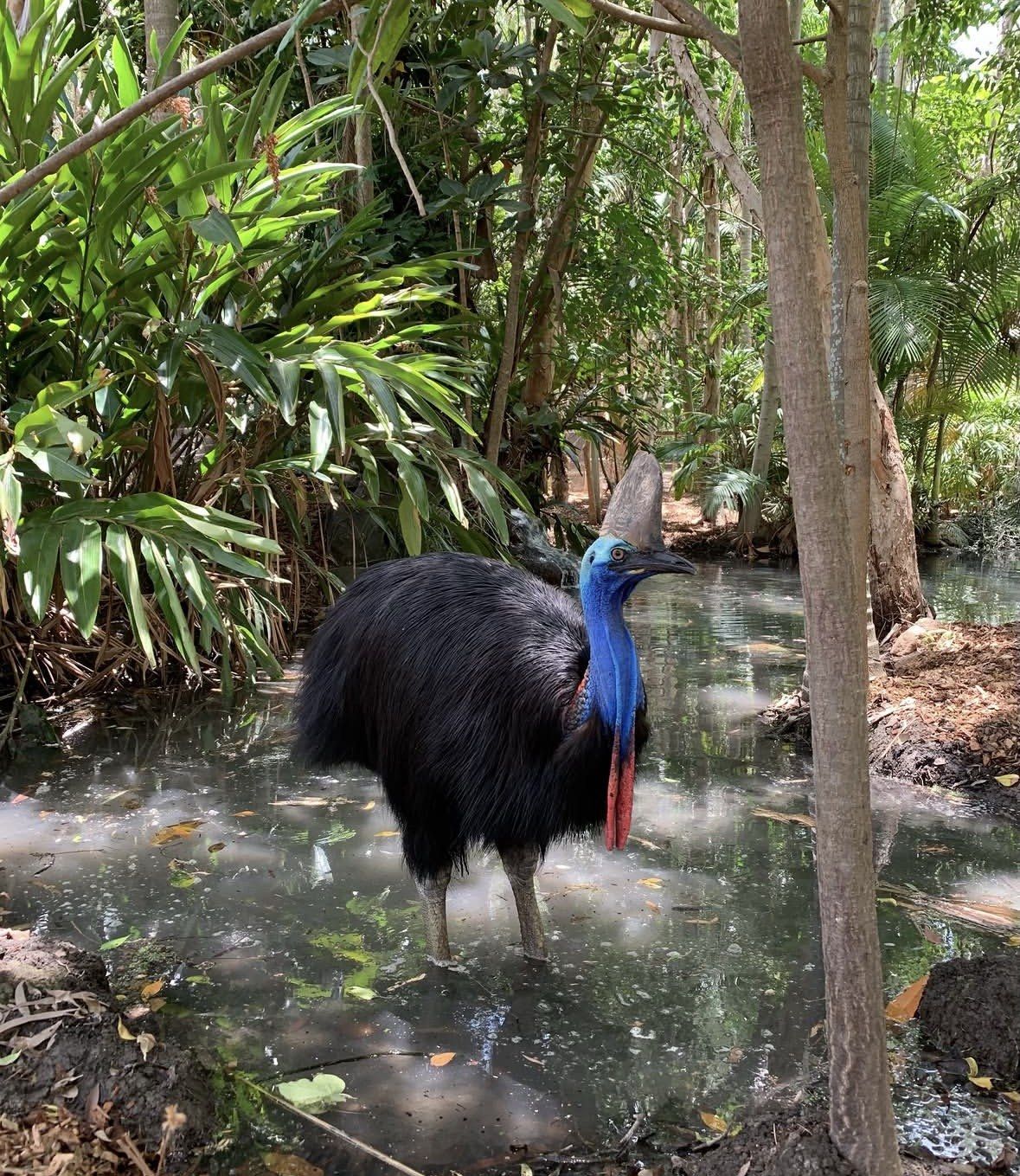
Never approach an adult cassowary or a chick, never come between a chick and its father, and never feed one
Slow down in cassowary habitat along Cape Tribulation Road and do not stop the car to look at a bird on the road
For Mount Sorrow, Parks advises starting before 10am and leaving the 680 m lookout by 2pm; it is Grade 4 and navigation demands attention
Location
Find the Daintree Rainforest
Daintree National Park (CYPAL), Cape Tribulation Road, Cape Tribulation, Queensland 4873, Australia.
Plan your visit
Practical info for the Daintree Rainforest
Driving times, the river ferry, boardwalks, wildlife, weather and seasons, gathered page by page.
Straight answers on the river crossing, driving times, walks, wildlife rules and which tour suits you.
No. The road from the Daintree River ferry to Cape Tribulation is sealed the whole way, though it is steep and winding over the Alexandra and Noah Ranges. Only past Cape Tribulation does that change: the Cape Tribulation-Bloomfield Road, the old Bloomfield Track towards Wujal Wujal and Cooktown, is a 4WD-only route with creek crossings and is never suitable for towing, and the CREB Track is the same.
Budget 9 to 12 hours, because the driving eats most of it. Cairns to the ferry is around two hours, it is about another 45 minutes from the north bank to Cape Tribulation, and the whole Cairns to Cape Tribulation run is roughly 140 km; from Port Douglas the ferry is about 45 minutes away. The Daintree and Cape Tribulation Full Day Tour is 9 hours, from A$239, rated 4.7 ★ (1,161 reviews), with return transfers, a driver-guide and live commentary, though southside accommodation transfers are not included and travellers make their own way to the operator's office. The Cape Tribulation, Mossman Gorge and Daintree Day Trip runs 10-12 hours, from A$239, 4.6 ★ (2,073 reviews), and does include hotel pickup and drop-off.
There is no bridge. The cable ferry is the only vehicle crossing, and according to the official operator it runs continuously from 5am to midnight every day of the year, including Christmas Day. It carries about 27 standard vehicles per trip and the crossing takes roughly 15 minutes including loading and unloading, so in peak season the queue can stretch back along Cape Tribulation Road, and from 9am to 4:30pm the right-hand lane is reserved as a priority lane for locals and some commercial vehicles. The ferry crossing is included in the full-day tours on this site that go north of the river, which takes the queueing decision out of your morning.
Treat the river, the coastal creeks and the sea as no-swim water. Estuarine crocodiles live in the Daintree River and along the coast, they occur between Gladstone and Cape York Peninsula in any waterway and in the sea, and they can stay submerged out of sight for hours; the Queensland Government's Be Crocwise rules are to stay out of the water and keep at least 5 metres back from the water's edge. Douglas Shire Council says never swim where crocodiles may live even if there is no warning sign, notes activity peaks in the September to April breeding season, and warns that floodwaters spread crocodiles into places they do not normally live. Marine stingers including box jellyfish and Irukandji are present all year with risk peaking November to May, and a full-body stinger suit is recommended for anyone entering the ocean. Where a tour includes a swim it is at the freshwater spot the operator uses and the operator's instructions govern: the Daintree and Cape Tribulation Full Day includes a rainforest swim, and the UTV Cassowary Falls Adventure, 2.5 hours from A$184 and rated 5.0 ★ (69 reviews), includes private waterfall access and a swim.
May to September is the high season in Tourism Australia's account, and the better window for long walks, with December to April the wet low season: high humidity and frequent rain, but the best waterfalls. The green season runs roughly November to May and delivers 75 to 90 per cent of annual rainfall; the Daintree Rainforest averages about 3,000 mm of rain a year, with maximums of 28 to 30°C and minimums of 20 to 24°C, summer maximums around 31°C and winter around 26°C. Sea temperatures run from about 23°C in July to 28°C in February. Tours run in the rain, but the weather shapes the plan: pick a cool month and an early start if wildlife is your priority.
Local sighting records point to Cape Tribulation Road between Cow Bay and Cape Tribulation, Stewart Creek Road at Daintree Village, the Dubuji Boardwalk, Myall Beach and the Cape Tribulation foreshore. Timing counts for more than luck: sightings are most likely around 6 to 9am and 4 to 6pm, and more common during the October to April fruiting season. The southern cassowary grows up to 2 metres tall and weighs up to 76 kg for females and 55 kg for males, and the official encounter rules are never to approach an adult or a chick, never to come between a chick and its father, and never to feed them. Drivers are asked to slow down in cassowary habitat and not to stop the car to look at a bird on the road.
Yes. You park at the Cultural Centre and travel in by shuttle, because no footpath or legal walking route runs from the car park into the gorge. The shuttle goes every 15 minutes from 8:00am to 5:00pm, seven days a week except Christmas Day, with the last bus leaving the gorge at 4:30pm. The Eastern Kuku Yalanji are the Traditional Owners here, and the Kuku Yalanji-guided Ngadiku Dreamtime Walk runs about 1.5 hours with departures at 10am, 11am, 12pm, 1pm and 2pm, taking in a smoking ceremony, an ochre demonstration, bush tea and damper. Mossman Gorge sits about 20 minutes from Port Douglas and 75 minutes from Cairns, and it needs no ferry crossing at all.
Most of the signature walks are short boardwalks. Dubuji at Cape Tribulation is a 1.2 km Grade 1 circuit of about 45 minutes, the Kulki boardwalk is 600 m return in 10 minutes to an ocean viewing platform, Jindalba at Cow Bay is 650 m return in 45 minutes, and Madja is 1.2 km in 45 minutes; at Mossman Gorge the self-guided options are the 660 m Baral Marrjanga track (30 minutes, Grade 1), the 1.4 km Rex Creek bridge track (1 hour) and the 3.4 km Rainforest Circuit (2 hours, Grade 3). Boardwalk access can change, and the regional visitor guide has reported Kulki closed for upgrades, so check on the day. Only two walks are genuinely demanding, both Grade 4: Mount Sorrow Ridge Trail, 7 km return and about 6 hours to a 680 m lookout, and Manjal Jimalji, 10.6 km return over about 8 hours. Parks advises starting Mount Sorrow before 10am and leaving the lookout by 2pm.
Go, and go early. The Solar Whisper cruise is 1 hour, from A$35, rated 4.9 ★ (1,811 reviews), on a family-run zero-emission electric boat moored on the south bank, with commentary, admission and a small group; the operator offers a repeat cruise if no crocodile is seen and notes that crocodiles become harder to spot once the river warms up, which is the argument for the first slots of the day in a cooler month. The meeting point is 400 m before the car ferry on the left, at the ticket office with a dinosaur at the front marked Solar Whisper, and hotel pickup, insect repellent and raincoats are not included. Most cruises leave from the southern, Daintree Village side, so it fits neatly either side of your crossing. A wildlife cruise is also built into the Port Douglas small-group day and the hotel-pickup day trip.
Daintree National Park (CYPAL) is jointly managed by the Jabalbina Yalanji Aboriginal Corporation and the Queensland Parks and Wildlife Service, not by a tourism company, and the Eastern Kuku Yalanji people are the Traditional Owners; Kulki (Cape Tribulation) and Wundu (Thornton Peak) are culturally significant places. On 29 September 2021 the Eastern Kuku Yalanji gained formal ownership of 160,213 hectares including the national park, the first World Heritage-listed parks returned to First Nations owners in Queensland. The park itself covers 73,500 hectares in two separate sections, Mossman Gorge and Cape Tribulation, with the Cape Tribulation section running about 17,000 hectares from the Daintree River north to the Bloomfield River, and Douglas Shire Council puts the wider Daintree Rainforest at 120,000 hectares. If culture matters more to you than ticking off sights, the Small Group Daintree and Aboriginal Coastal Adventure runs 10 hours, from A$402, rated 4.9 ★ (16 reviews), with a guided walk at Mossman Gorge, an Aboriginal art class, a driver-guide sharing stories and culture, and a bush-flavour lunch at the Mayi Cafe.
Daintree Rainforest: 180 million years and the 2021 Kuku Yalanji handback
This forest has been growing for more than 180 million years, according to Tourism Australia, and the wider region has held World Heritage listing since 1988 for all four natural criteria. On 29 September 2021 the Eastern Kuku Yalanji people gained formal ownership of 160,213 hectares including the national park.